
Introduction
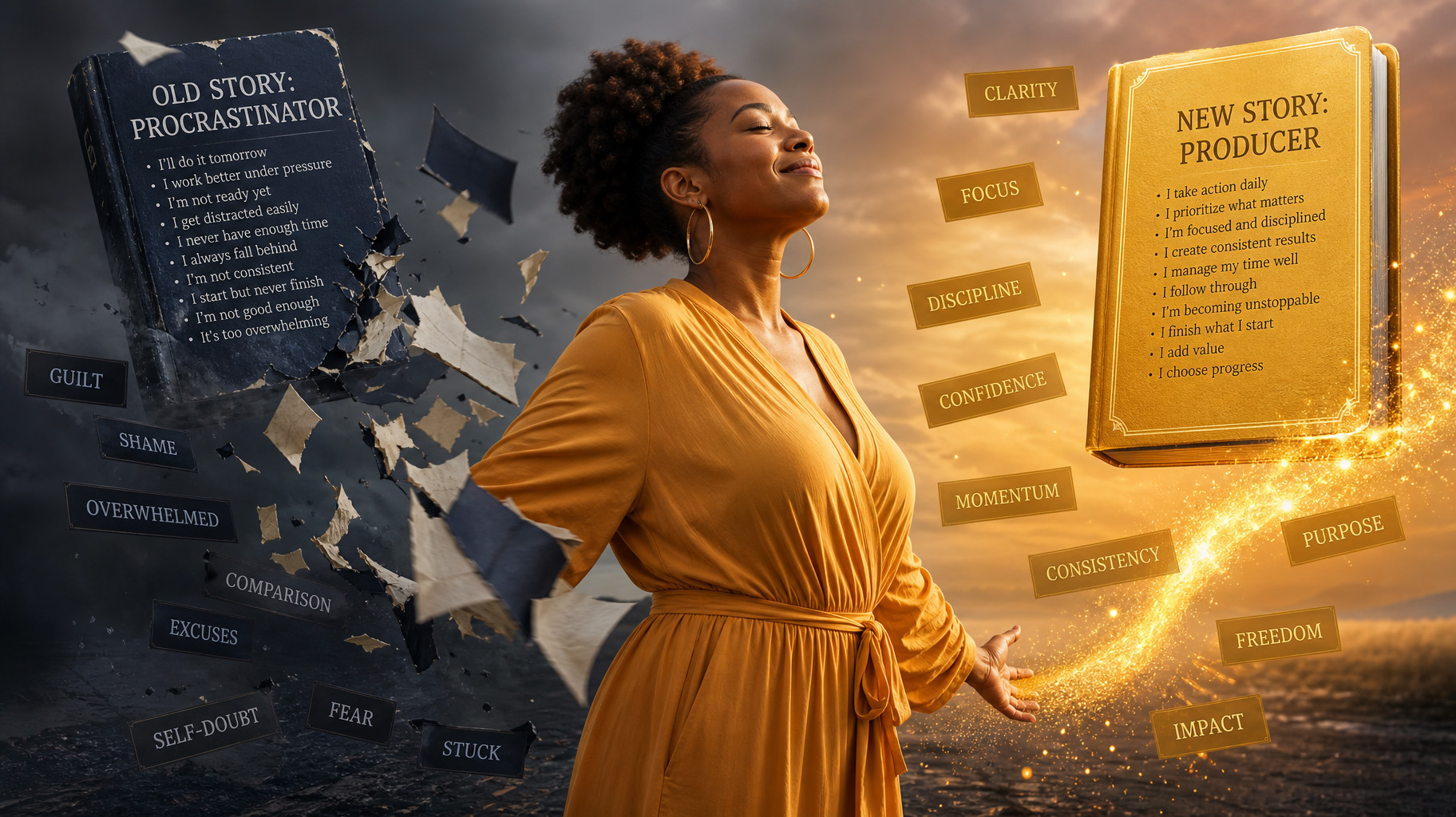
You’ve told your procrastinator story so many times it’s become fact. Therefore, you say “I’m a procrastinator” like it’s truth, not narrative. Additionally, others have reinforced this story: “That’s just who you are.” Consequently, the story has calcified into identity.
Here’s what’s powerful: stories are constructed, not discovered. Therefore, you can reconstruct them. Additionally, the story you tell about yourself determines how you live. Moreover, changing your story changes your life. Importantly, this isn’t positive thinking or denial—it’s recognizing that narratives are chosen, not fixed.
The procrastinator story serves a purpose. Therefore, you can’t just decide to stop telling it. Rather, you must understand what the story provides, grieve its loss, and consciously build a new narrative. Additionally, this is the final work of the DISMANTLE phase: releasing the old story completely so the producer story can take root.
Understanding Your Procrastinator Story
The Story Structure
Your procrastinator story likely includes elements like:
- Origin: “This started when…” (teacher feedback, failure, pressure)
- Pattern: “I’m someone who…” (works best under pressure, can’t start without urgency)
- Justification: “The reason I do this is…” (high standards, creative process)
- Prediction: “This means I’ll always…” (struggle with deadlines, never be strategic)
Additionally, the story feels comprehensive. Therefore, it explains your behavior and predicts your future. Moreover, it’s been reinforced by years of evidence you’ve selectively gathered. Notably, this is why the story feels absolutely true.
The Story’s Protective Function
Your procrastinator story protects you. Therefore, examine what it protects against:
- Failure risk: If you’re a procrastinator, failure has an excuse—lack of time.
- Capability questions: If you’re a procrastinator, you don’t have to discover your actual limits.
- Responsibility: If it’s just who you are, you’re not choosing procrastination—it’s your nature.
- Visibility: The story keeps you safe in “could be great if I tried” rather than “actually tried and discovered my limits.”
Importantly, recognizing what the story protects helps you understand why releasing it feels scary. Additionally, it helps you build alternatives that provide the same protection differently.
The Problem With Your Old Story
It Limits Your Future
Your story predicts your future. Therefore, if your story is “I’m a procrastinator,” you’ll live as one. Additionally, you’ll interpret behavior through that lens. Moreover, you’ll dismiss evidence that contradicts the story. Notably, the story becomes a self-fulfilling prophecy.
This limitation is profound. Therefore, the story doesn’t just describe your past—it constrains your future. Additionally, it prevents you from becoming someone different. Importantly, as long as the story is active, transformation remains narratively impossible.
It Becomes Your Identity
Over time, the story stops being something you do and becomes who you are. Therefore, procrastination transitions from behavior to identity. Additionally, changing behavior without changing identity creates internal conflict. Moreover, you’re trying to act differently while still identifying as someone who procrastinates.
This is why so many people relapse: they’ve changed behavior but not narrative. Therefore, the old identity pulls them back. Additionally, old patterns feel like “getting back to myself.” Notably, releasing the story is necessary for lasting change.
Building Your Producer Story
Step 1: Acknowledge the Old Story
Rather than fighting the old story, acknowledge it. Therefore, name it explicitly: “My procrastinator story is…” Additionally, describe it fully. Moreover, notice how it’s been true and how it’s limited you. Importantly, this acknowledgment creates space for change.
Step 2: Identify the New Story Elements
Your producer story should include:
- New origin: “I’m building a new identity based on…” (choice, commitment, values)
- New pattern: “I’m becoming someone who…” (initiates early, thinks strategically, delivers intentionally)
- New foundation: “This is possible because…” (I can build new habits, I’m learning, I’m supported)
- New future: “This means I can…” (think strategically, contribute meaningfully, live without crisis)
Additionally, these elements should feel true to your experience now. Therefore, they’re not fantasy—they’re describing actual changes you’re making. Moreover, they’re grounded in evidence from your new behavior.
Step 3: Tell Your New Story Deliberately
Start speaking your new story intentionally. Therefore, when explaining yourself, use the new narrative: “I’m building my producer identity,” not “I’m working on my procrastination.” Additionally, when others use the old story about you, gently correct: “Actually, I’m approaching work differently now.”
Importantly, this isn’t denial of the past. Rather, it’s claiming your new narrative. Additionally, repetition rewires your self-concept. Moreover, others adjust their perception as your new story becomes consistent.
Step 4: Gather Evidence for the New Story
Each producer action is evidence for your new story. Therefore, document it: “I started work early today—that’s someone who’s building a producer identity.” Additionally, notice how the new story explains your behavior. Moreover, the evidence accumulates until the new story feels as true as the old one did.
When Both Stories Feel True
The Transition Zone
Early in transformation, you’ll hold both stories simultaneously. Therefore, you’re building a producer identity while still having procrastinator patterns. Additionally, this duality is normal and necessary. Moreover, it doesn’t mean the new story is failing—it means you’re in genuine transition.
Importantly, resist the temptation to return to the old story during this phase. Rather, acknowledge you’re changing: “I’m building my producer identity, and sometimes old patterns show up as I learn.” Additionally, this both-and statement is more accurate than pretending the old story doesn’t exist.
When the New Story Takes Root
Over months of consistent action, the new story becomes your genuine narrative. Therefore, you’ll stop identifying as someone recovering from procrastination. Rather, you’ll simply be a producer—someone who works strategically, delivers intentionally, and builds meaningful work. Moreover, the old story becomes history, not identity.
The Power of Narrative Ownership
Your story is yours to tell. Therefore, you’re not discovering fixed truths about who you are. Rather, you’re constructing the narrative through what you practice, who you spend time with, and what you pay attention to. Additionally, conscious narrative ownership is radical freedom.
This is where transformation becomes complete. Not just habits changed, not just beliefs shifted, but your entire story rewritten. Moreover, you’re no longer a procrastinator trying to change. Rather, you’re a producer whose story reflects that reality. Importantly, when your narrative aligns with your behavior and identity, transformation becomes sustainable.

free download
Want To Feel More Confident About Getting Things Done?
Grab this FREE guide that will help you break free from procrastination and boost your productivity!