Introduction
You sit down to work. However, a belief whispers: “I’m not creative enough for this.” Subsequently, you hesitate. You second-guess yourself. You procrastinate. Meanwhile, your colleague with less talent starts working immediately. The difference isn’t capability—it’s belief.
Your beliefs aren’t just thoughts. Rather, they’re operating systems that run your behavior automatically. Therefore, when you believe “I’m a procrastinator,” you act like one. Additionally, when you believe “I can handle difficult work,” you approach it differently. Notably, your results follow your beliefs more reliably than they follow your intentions.
This is why changing procrastination patterns without changing underlying beliefs often fails. You can create new habits, but if your beliefs haven’t shifted, those habits eventually collapse. Importantly, the producer’s mindset isn’t about positive thinking. Rather, it’s about believing things that are actually true about your capability and potential.
The Three Core Beliefs of Procrastinators
Belief 1: “I Work Best Under Pressure”
Procrastinators genuinely believe this. Therefore, they see deadline pressure as enabling, not hindering. Additionally, they interpret their success under pressure as evidence this belief is true. Notably, they miss the evidence that contradicts this belief: the stress, the burnout, the missed opportunities.
This belief protects the procrastination pattern. Therefore, without it, procrastinators would question why they’re living in constant panic. Additionally, the belief justifies the pattern as optimal. Importantly, releasing this belief requires admitting the pattern isn’t working—it’s just all they know.
Belief 2: “I Can’t Start Without Urgency”
Procrastinators believe they literally cannot access focus without deadline pressure. Therefore, they’ve stopped trying to start work early. Additionally, when they attempt to, the work feels impossibly slow. Moreover, they interpret this as evidence they truly can’t do it. Notably, they miss that they haven’t built capacity for calm focus—they’ve trained their nervous system to require panic.
This belief is self-perpetuating. Therefore, because they believe they can’t start without urgency, they don’t try. Subsequently, they never build the capacity. Furthermore, lack of capacity confirms the belief. Therefore, the cycle continues.
Belief 3: “My Worth Depends on High Achievement”
Procrastinators often link their self-worth directly to achievement. Therefore, perfect work means “I’m good enough.” Additionally, any imperfection means failure. Moreover, incompleteness means they’ve failed. Notably, this makes starting risky—what if they can’t achieve perfectly?
This belief drives perfectionism and procrastination simultaneously. Therefore, procrastination protects against the possibility of not achieving perfectly. Additionally, if the work never gets done, they can maintain the story: “I could be perfect if I tried.”
The Three Core Beliefs of Producers
Belief 1: “I Do My Best Work When I’m Rested and Focused”
Producers believe this. Therefore, they protect rest time. Additionally, they create focus conditions. Moreover, they recognize that quality comes from deliberate effort, not desperate panic. Notably, they’ve experienced the difference and chosen it.
This belief creates an entirely different relationship with work. Therefore, they start early to avoid panic. Additionally, they manage their energy and attention. Moreover, they optimize for sustainable performance, not crisis-driven urgency.
Belief 2: “I Can Build Capacity for Calm Focus”
Producers believe focus is a skill, not a personality trait. Therefore, they practice building it. Additionally, they recognize that calm focus feels different from panic focus—and slower isn’t worse. Moreover, they trust the process of building capacity. Notably, they’ve experienced the payoff of practiced focus.
This belief creates willingness to start early. Therefore, even if calm focus feels slow initially, they continue. Additionally, they know from experience that capacity builds. Moreover, the slow work becomes faster and better over time.
Belief 3: “My Worth Is Separate From My Achievement”
Producers believe they’re valuable regardless of output. Therefore, they can risk imperfect work without their self-worth crashing. Additionally, completed work matters more than perfect work. Moreover, they celebrate delivery over perfection. Notably, this separation enables actual achievement because they’re not paralyzed by perfectionism.
This belief is liberating. Therefore, they can start work without needing certainty of perfection. Additionally, they can iterate and improve. Moreover, they can fail and learn. Notably, they’re free to actually accomplish things.
How Your Beliefs Create Your Behavior
The Belief-Behavior Loop
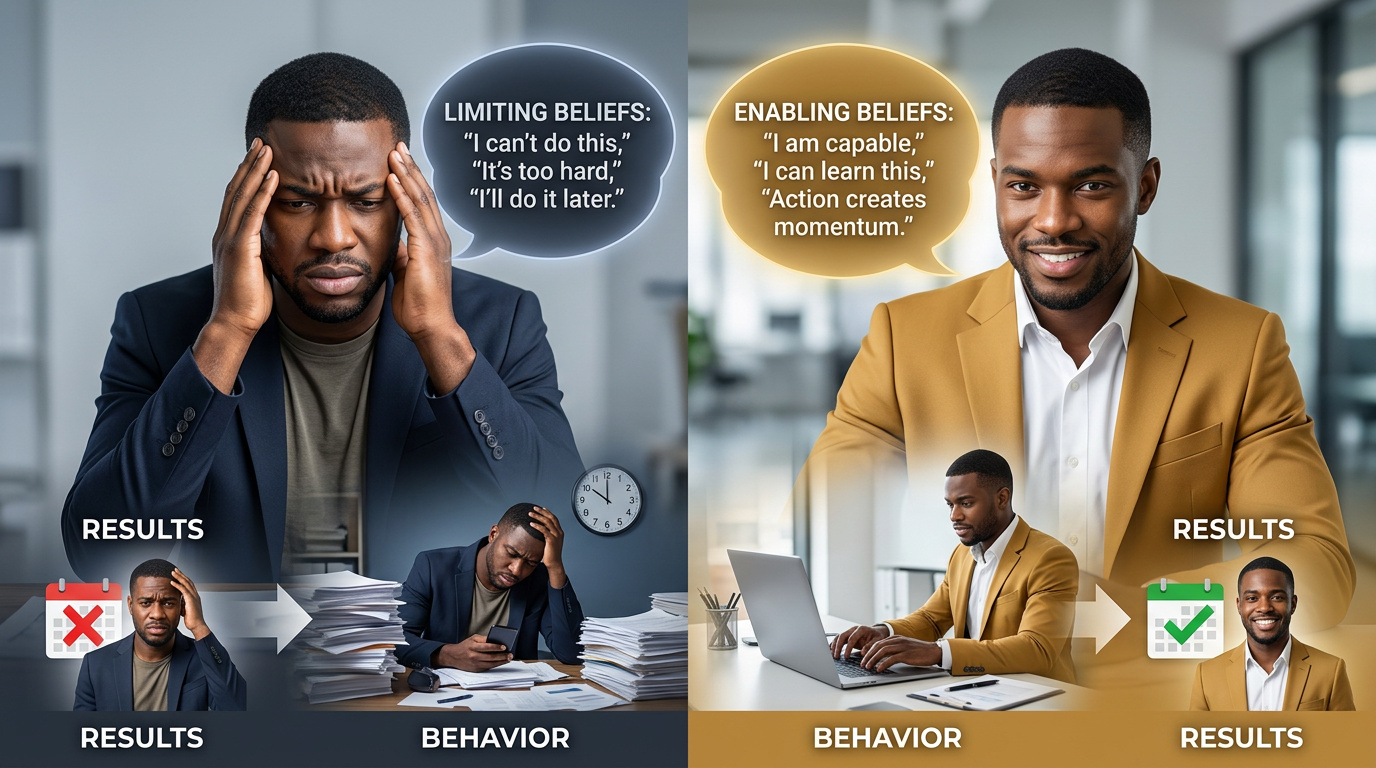
Your belief activates automatically. Therefore, when you encounter work, your belief system activates. Additionally, your belief shapes what you perceive. For example, a procrastinator sees difficulty as confirmation they “work best under pressure.” However, a producer sees difficulty as an opportunity to build capacity.
Your belief drives your behavior. Therefore, if you believe you need urgency, you’ll create it. Additionally, if you believe you’re valuable regardless of achievement, you’ll take risks. Moreover, your behavior produces results. Furthermore, those results confirm your belief. Notably, the loop continues regardless of whether the belief is true.
Changing Beliefs Requires Evidence
Beliefs change when they’re exposed to consistent contradictory evidence. Therefore, repeatedly doing calm focus work builds evidence that calm focus is possible. Additionally, starting early repeatedly builds evidence that you can initiate without panic. Moreover, completing good work builds evidence that perfectionism isn’t necessary. Importantly, this evidence accumulates until the belief shifts.
However, single experiences don’t change beliefs. Therefore, one good focus session doesn’t convince a procrastinator they can focus calmly. Rather, dozens of sessions over weeks create the evidence shift. Additionally, you must notice the evidence—actively acknowledge what contradicts the old belief.
Building Your Producer Beliefs
Step 1: Identify Your Procrastinator Beliefs
What do you genuinely believe about yourself, work, and achievement? Therefore, write it down. Specifically:
- “I work best under pressure”
- “I can’t start without urgency”
- “I’m only valuable if I achieve”
- “I’m naturally lazy”
- “Good work requires suffering”
Additionally, these beliefs feel true because you’ve lived inside them. Notably, you have evidence for them. However, that evidence is incomplete.
Step 2: Question These Beliefs Deliberately
For each belief, ask: “Is this absolutely true?” Additionally, look for evidence that contradicts the belief. Specifically:
- Times you’ve worked calmly and produced good work
- Times you completed something early
- Times you felt valuable despite imperfect achievement
- Times you worked sustainably and performed well
Furthermore, this evidence exists. However, procrastinators dismiss it. Therefore, deliberately collect it.
Step 3: Practice Producer Beliefs Deliberately
Start acting as if the producer beliefs are true. Therefore, act as if you do your best work when rested. Additionally, start work early as if you can focus calmly. Moreover, treat yourself as valuable regardless of achievement. Importantly, each action provides evidence that the producer belief might be true.
Step 4: Allow Beliefs to Shift Gradually
Don’t expect sudden belief transformation. Rather, expect gradual shifts as evidence accumulates. Additionally, after weeks of early starts, you’ll begin believing you can do it. Moreover, after weeks of completing work without perfect conditions, you’ll believe perfectionism isn’t necessary. Importantly, patience allows the belief to shift authentically rather than just forcing positive thinking.
From Procrastinator Beliefs to Producer Beliefs
Your current beliefs feel true because you’ve lived inside them. Therefore, they’ve been reinforced by your behavior and results. However, those beliefs aren’t unchangeable truths—they’re hypotheses you’ve tested in limited ways.
Producer beliefs feel different initially. Therefore, acting on them feels fake or optimistic. Additionally, the initial evidence feels fragile. Notably, with consistent action, the beliefs solidify. Furthermore, your behavior aligns with your new beliefs. Moreover, your results follow.
This is the deepest transformation. Rather than changing habits, you’re changing the operating system that drives habits. Additionally, this change creates lasting transformation because the behavior flows naturally from the belief.
Build Your Producer Mindset: [Click Here to Schedule Your FREE Call]
Follow me on instagram for daily motivation: [Click Here]

free download
Want To Feel More Confident About Getting Things Done?
Grab this FREE guide that will help you break free from procrastination and boost your productivity!